DHAHRAN — The US Navy began enforcing a full blockade of Iranian ports on April 13, eliminating from the Asian crude market the two suppliers — Iran and Russia’s shadow fleet — that had spent three years undercutting Saudi Aramco on price. Within hours, Brent surged 6.95 percent to $101.82, and every independent refiner from Jamnagar to Zhoushan faced the same question: where do the replacement barrels come from? The answer, on paper, is Saudi Arabia. In practice, Aramco’s own pricing formula, a bilateral rationing system that prioritizes allied governments, and a port bottleneck on the Red Sea may prevent the kingdom from filling the vacuum its geopolitical allies just created. The IMF’s own forecast rests on a normalisation assumption that the mine-clearance timeline makes impossible before late Q3 — a condition Aramco’s pricing desk cannot afford to ignore.
The blockade’s timing is not incidental. OFAC’s General License U — the narrow authorization permitting Indian refiners to discharge Iranian crude loaded before March 20 — expires on April 19, six days from now. The June Official Selling Price, which Aramco will announce around May 5, is the first monthly cycle set under a completely altered supply map. Between those two dates sits a window that will determine whether Saudi Arabia recaptures the Asian market share it lost during the war or watches its would-be customers draw down strategic reserves and cut refinery runs instead.
Contents
The Blockade’s Double Elimination
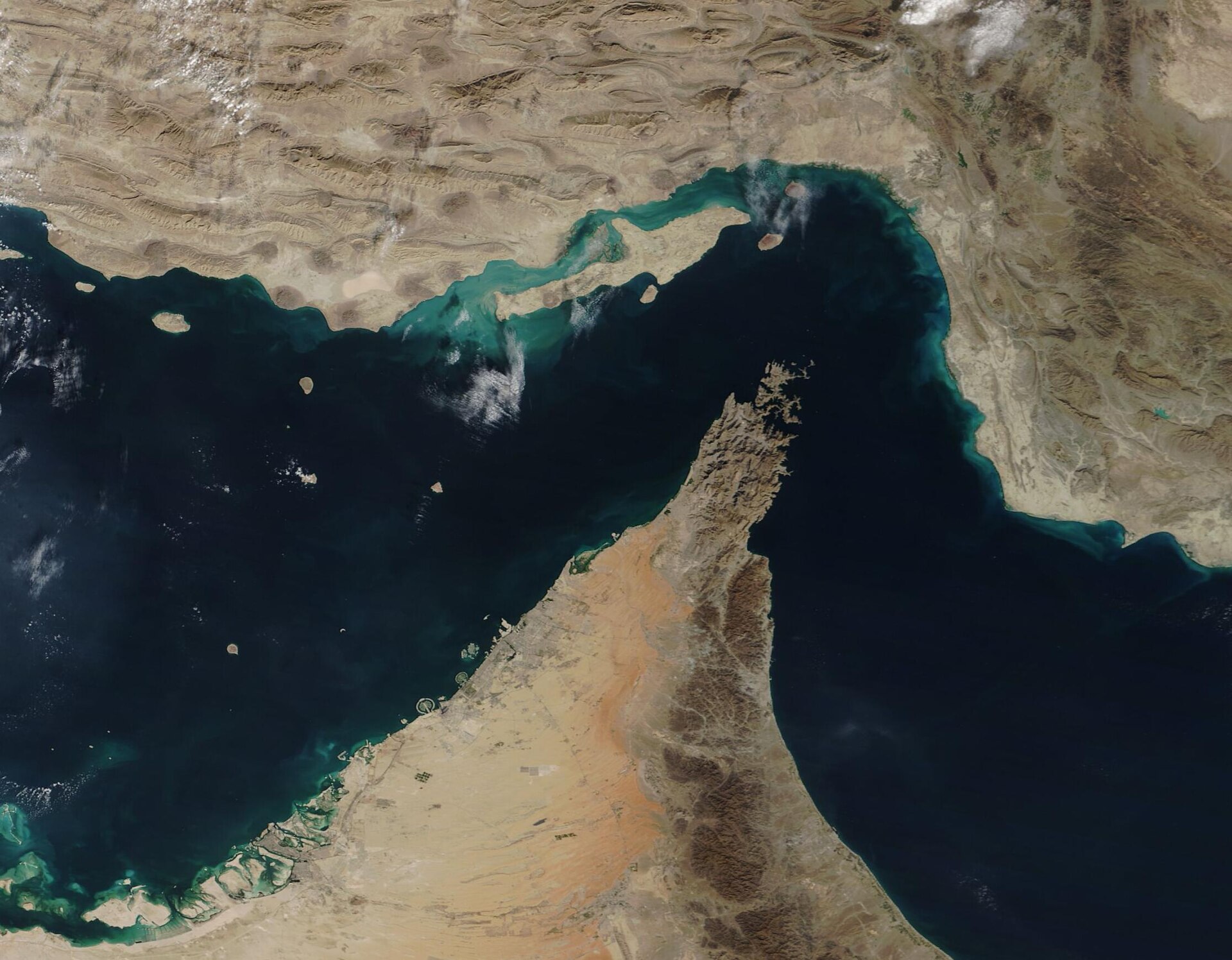
President Trump announced on April 12 that the US Navy would intercept any vessel entering or exiting the Strait of Hormuz that had paid transit tolls to Iran — a measure that targets not only Iranian crude exports but also the Russian shadow fleet that had been routing Urals cargoes through the strait to Chinese and Indian ports. Lloyd’s List Intelligence reported in early March that shadow and dark fleet vessels constituted 80 percent of tracked Hormuz transits, carrying an estimated 1 to 1.5 million barrels per day of Russian crude alongside Iran’s own 1.5 million bpd of war-era exports through the IRGC’s franchise system. Both streams are now subject to interdiction.
The Russian exposure is often overlooked. Moscow exported approximately 1.9 million bpd to China and 1.0 million bpd to India in February 2026, according to Kpler and Fortune. The US Treasury sanctioned 30 Russia-connected petroleum tankers in Asia carrying roughly 19 million barrels in mid-March, offering only a 30-day “narrowly tailored” exemption for cargoes already at sea — a phrase Treasury Secretary Scott Bessent used on March 14 to describe the carve-out’s deliberately limited scope. That exemption, like GL U, is expiring into a blockade that makes replacement impossible. Russia and China jointly vetoed a UN Security Council resolution on Hormuz that would have authorized multinational naval escorts, leaving Russian tankers exposed to US interdiction without multilateral legal cover.
For Asian refiners, the arithmetic is blunt. Iran’s 1.5 million bpd and the Russia-via-Hormuz stream of 1 to 1.5 million bpd together represent 2.5 to 3 million barrels per day removed from the accessible Asian supply pool. Russia-to-India routing via the Baltic and Arctic — roughly 2 million bpd by March, a 90 percent jump from February, according to India Briefing — continues unimpeded because it bypasses Hormuz entirely. But Russia-to-China Hormuz cargoes and the entirety of Iranian exports face a hard stop.
Yanbu’s Berths Are the Binding Constraint
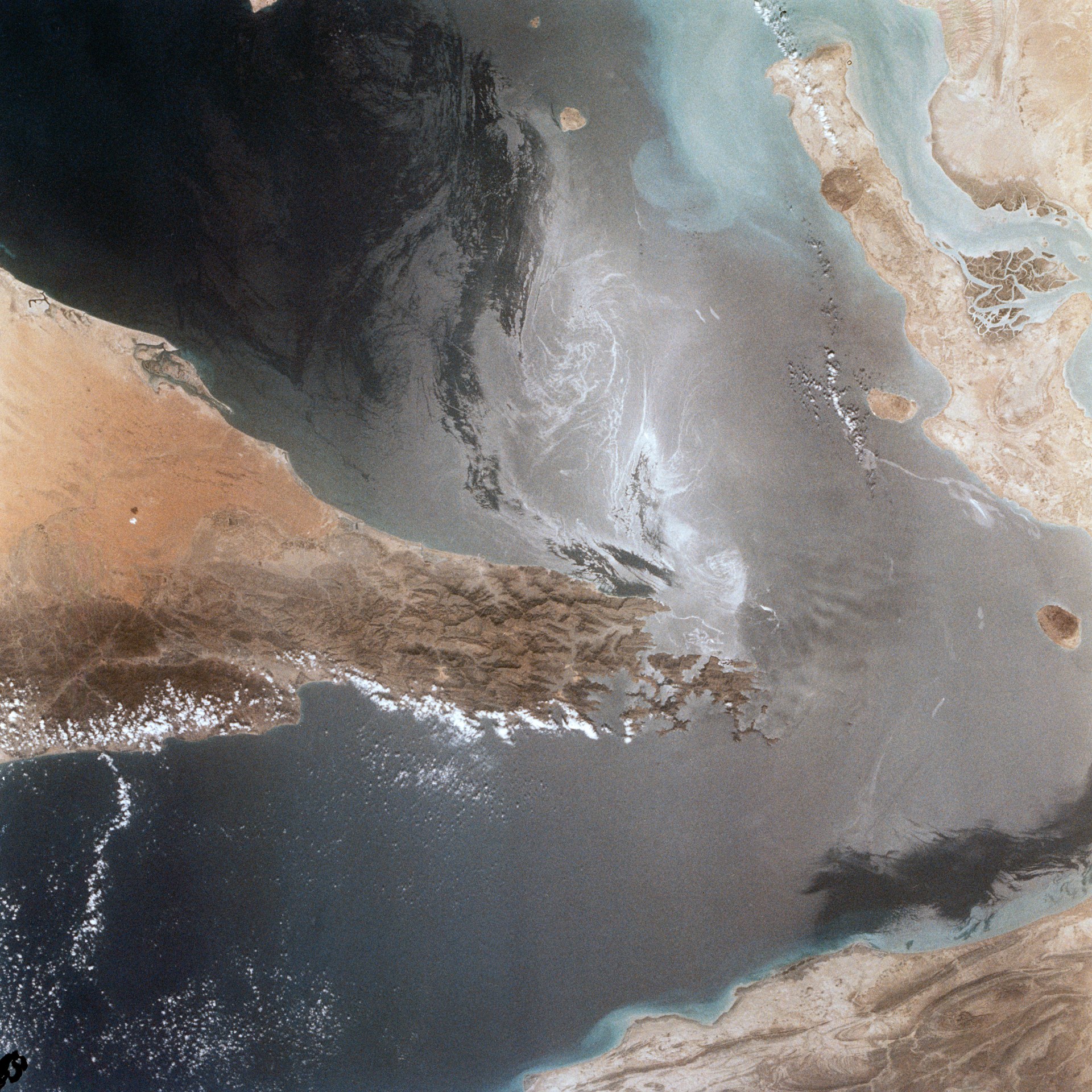
Saudi Arabia restored the East-West pipeline to its full rated capacity of 7 million bpd on April 12, one day before the blockade took effect. The Saudi Ministry of Energy announced the repair with deliberate emphasis: “This quick recovery reflects the high operational resilience and crisis management efficiency of Saudi Aramco and the Kingdom’s energy ecosystem.” The IRGC strike on April 8 had damaged a pumping station, temporarily cutting throughput, but the pipeline itself was never the problem. The port of Yanbu is.
The Middle East briefing 3,000+ readers start their day with.
One email. Every weekday morning. Free.
Yanbu’s loading berths can handle approximately 5.9 million bpd — a figure that has not changed since the war began, because berth capacity is a function of physical infrastructure that cannot be expanded in weeks. Before the war, Saudi Arabia exported 7 to 7.5 million bpd through a combination of Hormuz-facing terminals (Ras Tanura, Ju’aymah) and Yanbu. With Hormuz-loading suspended, the structural export gap is 1.1 to 1.6 million bpd that Saudi Arabia cannot ship regardless of how aggressively Aramco prices its crude. The pipeline runs at 7 million; the port caps exports at 5.9 million. The difference sits in storage tanks.
Saudi March crude exports to Asia fell to 4.355 million bpd, a 38.6 percent decline from February’s 7.108 million bpd, according to Bloomberg and Kpler. April projections are worse: roughly 40 million barrels to China (down from February’s 48 million) and 23 million barrels to India. The Khurais field, producing 300,000 bpd before the war, is still being restored. These are not pricing failures. They are physical constraints that no discount can overcome.
Who Gets the Barrels Saudi Arabia Can Ship?
Even the barrels Aramco can load at Yanbu are not available to the buyers who most need them. South Korea confirmed on April 12 that it had secured 80 percent of its May crude requirements through direct government-to-government commitments from seven GCC states — a bilateral allocation system that has quietly replaced the spot market as the primary distribution mechanism for Gulf crude in Asia. Allied governments — South Korea, Japan, and treaty partners with defense relationships — receive priority allocations. Independent commercial refiners in China and India, the same buyers who shifted to cheaper Iranian and Russian barrels over the past three years, find themselves at the back of a queue with almost no spot availability.
This is not accidental. The bilateral system serves a strategic function: it rewards the governments that maintained Saudi crude purchases through the war and penalizes those that did not. But it also means that the very refiners who created the demand gap Saudi Arabia wants to fill — Sinopec, CNPC, India’s IOC and BPCL — cannot access Saudi barrels even if they wanted to buy them at the current price. The system is optimized for alliance maintenance, not market-share recovery.
China’s exposure is compounded by its upstream entanglement. CNPC and Sinopec hold 8 million tonnes per annum of contracted Iranian crude offtake and 5 percent equity in Qatar’s North Field East LNG expansion — both disrupted by the war and now by the blockade. Chinese refiners have been lobbying Aramco to reprice against ICE Brent futures rather than the Oman/Dubai benchmark combination that forms the basis of the current OSP, according to Bloomberg and Gulf Times reporting from March 19. S&P Global Platts suspended nominations of Hormuz-loading crude grades from the Dubai benchmark, inflating the Gulf assessment relative to Brent and making the existing pricing formula punitive for buyers who have alternatives. Aramco has not agreed to the switch.
What Happens When GL U Expires on April 19?
OFAC’s General License U, issued March 20, authorized Indian refiners to accept Iranian crude loaded on or before that date, with a discharge deadline of April 19. Only approximately 2 million barrels of Iranian crude actually reached India under the license, according to TankerTrackers — a fraction of what the authorization technically permitted. State refiners IOC, BPCL, and HPCL received individual OFAC authorizations but largely stayed on the sidelines, wary of secondary sanctions exposure. Nayara Energy, operator of India’s 400,000 bpd Vadinar refinery and 49.13 percent owned by Rosneft, faces stacked risk: both Russia-nexus and Iran-nexus sanctions apply simultaneously.
The structural comparison that matters is 2019. When the Pompeo administration ended Iran crude waivers on May 2, 2019, India received 180 days of notice to find replacement supply. GL U provides 30 days with no wind-down provision — the same supply disruption compressed into one-sixth of the adjustment period. India’s post-GL U Iranian crude gap is estimated at 300,000 to 450,000 bpd, barrels that Indian refiners must replace immediately with no ramp. India’s procurement ministry claimed on April 4 that “crude oil supply is fully secured, no payment hurdle for Iranian imports.” That statement preceded the April 12 blockade declaration by eight days.
India has partially insulated itself through diversification. Non-Hormuz crude now accounts for roughly 70 percent of Indian imports, up from 55 percent before the war, according to India Briefing. Russian Baltic and Arctic routing absorbed the supply gap left by Iranian waivers. But Russian barrels are not fungible with Iranian heavy grades; Indian refineries optimized for Iranian or Russian Urals crude require blending adjustments to process Arab Light, adding cost and reducing yield. Saudi Arabia’s share of Indian crude imports fell from 16 percent to 11 percent during the shift to Iranian and Russian supply. Winning those barrels back requires not just availability but a price competitive enough to justify the refinery reconfiguration.
Can China’s Strategic Reserve Outlast Saudi Pricing?
Beijing has a buffer that New Delhi does not. China’s strategic petroleum reserve held approximately 1.2 billion barrels as of early 2026 — roughly 109 days of seaborne import cover, according to Kpler’s April 7 assessment. Sinopec has been drawing on the SPR rather than purchasing Iranian crude at war-era premiums, while simultaneously buying Saudi crude loading from Yanbu and sourcing barrels from outside the Middle East entirely. Sinopec also ordered a halt to new fuel export contracts as of March 5, redirecting refinery output to the domestic market and reducing the volume of crude imports needed.
The SPR draw is a deliberate choice to wait. If Chinese refiners believe Aramco will cut the June OSP sharply — and the May OSP’s $15-plus premium above current spot gives them reason to expect a correction — then every barrel drawn from reserves today is a barrel bought cheaper next month. This is the paradox Saudi Arabia faces: the more overpriced the May OSP appears relative to spot, the stronger the incentive for China’s largest buyers to deplete reserves rather than lock in term contracts, and the weaker Saudi Arabia’s negotiating position becomes when the June pricing window opens around May 5.
Kpler estimated pre-crisis Hormuz throughput at 15 million bpd of crude and products. The current transit rate is 15 to 20 ships per 24 hours versus a pre-war average of 138 per day — a collapse that the blockade will deepen further. Roughly 800 vessels remain trapped in holding patterns, and more than 70 empty VLCCs are idling off Singapore, each facing a four-week voyage to the Gulf even if loading were possible. The physical logistics of rerouting global crude flows operate on a timeline measured in months, not the days that separate GL U’s expiry from the June OSP announcement.
The May 5 Repricing Dilemma
Aramco’s May OSP for Arab Light to Asia was set at a $19.50 per barrel premium above the Oman/Dubai average — announced April 6 when Brent traded near $109. Bloomberg’s survey of Asian traders had expected a premium closer to $40, meaning Aramco deliberately left $20.50 per barrel on the table. The restraint was legible as a signal: Saudi Arabia would not extract maximum war premium from its remaining customers. But Brent has since fallen to around $101-103, and the May OSP now sits approximately $15 above spot. Term buyers locked into May lifting schedules are paying a premium that reflects a market that no longer exists.
The June OSP, expected around May 5, presents Aramco with a choice that has no comfortable outcome. A sharp cut — say, halving the premium to $8-10 above benchmark — would pull Chinese and Indian refiners back to Saudi term contracts and begin reversing the market-share losses of the past three years. But it would also retroactively confirm that May’s pricing was extractive, undermining the trust Aramco spent decades building with Asian national oil companies. Every barrel sold in May at $19.50 above benchmark while June resets to $10 becomes evidence that Aramco prices for capture, not partnership.
Holding the premium near current levels carries a different cost. China’s 1.2 billion barrel SPR can absorb months of reduced imports. India’s pivot to Baltic Russian crude is already at 2 million bpd and rising. Demand destruction — refineries cutting runs rather than buying overpriced crude — is the mechanism through which buyers absorb supply shocks they cannot price away. Saudi Arabia’s fiscal break-even, estimated by Bloomberg at $108-111 per barrel when PIF obligations are included, leaves almost no margin at current Brent levels. Goldman Sachs projected an $80-90 billion deficit versus the official $44 billion budget gap. Every month of suppressed export volumes at sub-break-even pricing compounds the fiscal damage. Saudi Arabia’s March 2026 revenue neutrality trap — the precise mechanism by which OPEC+ supply collapse translates into fiscal shortfall — is documented in full in the OPEC April monthly report analysis.
The benchmark question adds a procedural obstacle. Asian buyers want Aramco to price against ICE Brent; Aramco uses Oman/Dubai. Platts’ suspension of Hormuz-loading grades from the Dubai assessment has distorted the Gulf benchmark upward, making the Oman/Dubai formula structurally more expensive for buyers than a Brent-based alternative would be. Switching benchmarks mid-crisis would be unprecedented for Aramco, but refusing to switch while the existing benchmark is visibly broken gives Chinese refiners a reason to stay in their SPR rather than sign term contracts priced against a number they consider artificial.
Saudi Arabia is the last major crude supplier standing in Asia. Iran’s barrels are blockaded. Russia’s Hormuz cargoes are interdicted. The East-West pipeline is running at capacity. And yet the kingdom’s export ceiling at Yanbu, its government-to-government allocation priorities, and a pricing formula anchored to a distorted benchmark mean that the buyers who need Saudi crude most — China’s Sinopec, India’s IOC — may not be able to access it at a price they will pay. The supply vacuum is real. Whether Saudi Arabia fills it depends on what number Aramco puts on a piece of paper around May 5, and whether 5.9 million barrels per day through a Red Sea port is enough to replace what 15 million once moved through a strait 30 kilometers wide. For a full analysis of the June OSP decision facing Aramco on May 5 — and why all three available options carry compounding costs — see Saudi Arabia’s June pricing crisis.
That market-share erosion is now quantified: record-low Saudi volumes to China in May confirm that the +$19.50/bbl OSP premium has already converted term buyers into spot abstainers, with Sinopec and Rongsheng Petrochemical both significantly cutting May nominations.